

Unique Protein Profile
Milk contains different types of proteins; the major ones are casein and whey. These types of proteins can behave differently in little tummies (1).
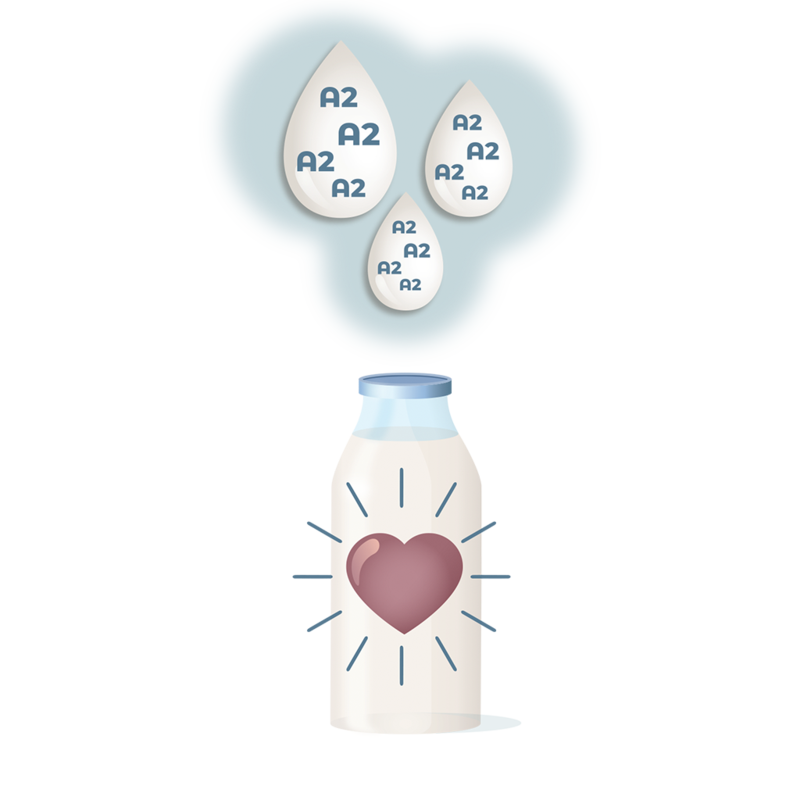
There are two types of caseins that can especially make a difference: A1 Beta-casein and Alpha S1-casein. These both have been shown to cause inflammation and digestive upset. A1 can be found in Cow milk where Goat milk only contains the A2 type beta-casein (2).
Lower amounts of Alpha S1-casein can produce a softer curd in the stomach, enabling it to be broken down more comfortably. Goat milk can have as low as 5.6% vs 38% in Cow milk (3).
Unique Fat Profile
Smaller Fat Globules Did you know that Goat milk fat globules are 5-10 smaller than cow milk fat globules? The size of a milk fat globule can make a difference to its digestibility. If smaller, it is broken down more readily by digestive enzymes (4). Medium Chain Fatty Acids (MCTs) Milk fat globules contain different types of fats which are digested differently in little tummies. MCTs are easily broken down and absorbed faster compared to other types of fats. Because they are broken down so quickly, they become an immediate energy source - ready to go! Goat Milk contains higher amounts of MCTs compared to Cow Milk (5).

Unique Oligosaccharide Profile
Goat milk contains a naturally higher level of prebiotic oligosaccharides. Prebiotics provide food to the beneficial gut bacteria, maintaining overall health and wellbeing. The presence of oligosaccharides in Goat milk is at least 5x times higher than Cow milk (6).
There are many different oligosaccharides, but one in particular, 2’Fucosyllactose (2’FL), is a particularly important food to the beneficial gut bacteria, it also aids in preventing the growth of nasty pathogens in the gut. Goat milk naturally contains 2’FL, where Cow milk does not (7).
Another oligosaccharide found in Goat milk is GOS or 3-galactosyllactose, which is a natural GOS type of prebiotic sugar. GOS is known to reduce the adhesion of nasties in the gut and enhance the growth of the beneficial bacteria, especially lactobacillus and bifidobacteria, which is the predominant bacteria in little digestive systems (8).